From ‘Extinct’ to Resurfacing? Akalis cite Zila Parishad gains to challenge CM Mann’s ‘Dinosaur’ jibe
Harvinder Kaur
Chandigarh, December 19, 2025: Punjab Chief Minister Bhagwant Mann’s repeated description of the Shiromani Akali Dal (SAD) as “dinosaurs” may have dominated political rhetoric, but the Akalis are now pointing to their performance in Tarn Taran bypoll and recent Zila Parishad and Block Samiti elections to argue that reports of their political extinction are premature.
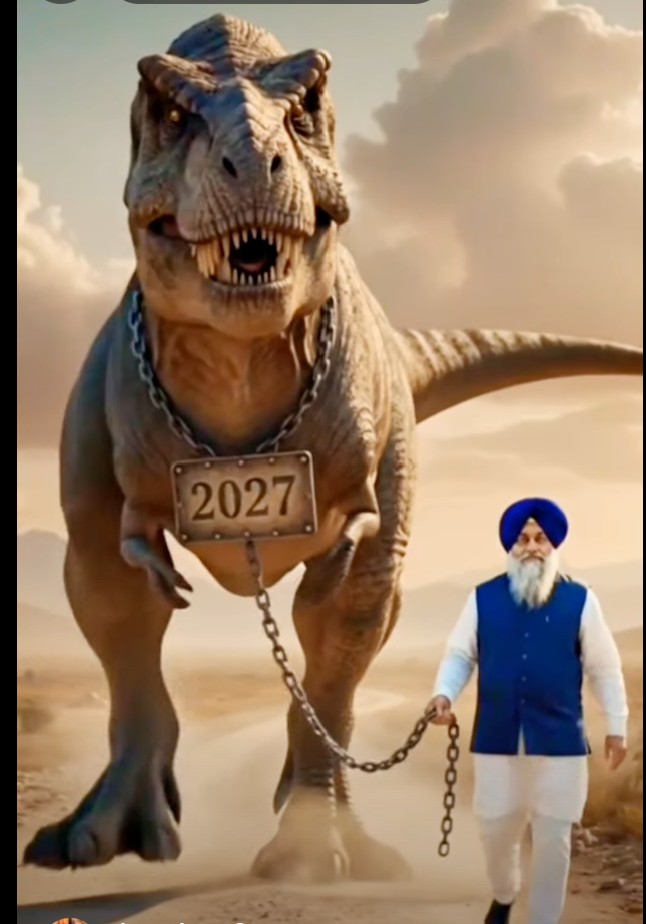
During the 2022 Assembly elections campaign, Mann had compared the Akali leadership to dinosaurs—an analogy he repeated in Bathinda ahead of the 2024 Lok Sabha polls—claiming that the Badal family and their style of politics would soon vanish from Punjab’s political landscape. The comments came after SAD’s dramatic fall to just three Assembly seats in 2022, down from 15 seats in 2017.
Although trailing on third position in rural local body elections, the Shiromani Akali Dal managed to make its presence felt in several key Zila Parishad and Block Samiti seats, particularly in its traditional rural strongholds.
SAD candidates secured victories in Sandhwan village, Jagdev Kalan Block Samiti, and Basarke Gillian Block Samiti in Attari, where the Akali candidate won by a margin of 1,700 votes, indicating continued support in core rural belts.
In Sandhwan Block Samiti, SAD candidate Mohinder Singh defeated AAP’s Mukhtiar Singh by 171 votes, a result the party has cited as evidence of its grassroots resilience.
While the AAP emerged as the overall sweeping winner in the Zila Parishad and Block Samiti polls, the Shiromani Akali Dal gave stiff competition in multiple constituencies and finished as a strong runner-up in several areas.
SAD spokesperson Parambans Singh Bunty Romana dismissed Mann’s “dinosaur” remark, arguing that the party was regaining organisational strength at the grassroots. He likened the rural poll results to “dinosaur eggs” that, according to him, would “hatch” by the 2027 Assembly elections.
For now, the “dinosaurs” metaphor continues to fuel Punjab’s political debate—but the Akalis insist they are not extinct, only regrouping.
Dinosaurs: A Backgrounder
What Are Dinosaurs?
Dinosaurs were a diverse group of reptiles that dominated the Earth for over 160 million years, during a period known as the Mesozoic Era. They first appeared about 230 million years ago and went extinct around 66 million years ago, except for one surviving lineage—modern birds.
The Age of Dinosaurs
The Mesozoic Era is divided into three periods:
-
Triassic Period (230–201 million years ago): Early dinosaurs emerged.
-
Jurassic Period (201–145 million years ago): Dinosaurs grew larger and more diverse; iconic species like Brachiosaurus appeared.
-
Cretaceous Period (145–66 million years ago): The peak of dinosaur diversity, ending with a mass extinction.
Types of Dinosaurs
Dinosaurs are broadly classified into two groups based on hip structure:
-
Saurischians (Lizard-hipped): Included meat-eaters like Tyrannosaurus rex and long-necked herbivores like Diplodocus.
-
Ornithischians (Bird-hipped): Mostly plant-eaters such as Triceratops and Stegosaurus.
They were also categorized by diet:
Size and Behavior
Dinosaurs ranged from chicken-sized creatures to giants over 30 meters long. Some walked on two legs, others on four. Many lived in herds, laid eggs, and some had feathers.
Dinosaurs and Birds
Scientific evidence shows that birds evolved from small, feathered dinosaurs. This makes birds the only living dinosaurs today.
Extinction
Most dinosaurs became extinct about 66 million years ago, likely due to a massive asteroid impact near present-day Mexico, which caused drastic climate changes. This event is known as the Cretaceous–Paleogene (K-Pg) extinction.
How We Know About Dinosaurs
Knowledge of dinosaurs comes from:
-
Fossils (bones, teeth, footprints)
-
Rock layers and radiometric dating
-
Modern scientific tools like CT scans and computer modeling
Why Dinosaurs Matter
Studying dinosaurs helps scientists understand:
-
Earth’s ancient climate and ecosystems
-
Evolution and extinction processes
-
The origins of birds and modern life