Texla on Air: The Man Who Switched On Punjab.....by KBS Sidhu
From Partition’s rupture to Texla’s glow—Raja Singh Oberoi’s quiet, steadfast legacy of enterprise, seva and chardikala
Sardar Raja Singh Oberoi’s life reads like a parable of Partition, perseverance and quiet faith—lived out not in grand speeches but in the soft glow of radio valves and television picture tubes that lit up ordinary Indian homes.
Born on 19 February 1936 in Hillan village of Mirpur near Rawalpindi in undivided Punjab, he would be uprooted at the age of eleven, arrive in a new India with little material security and no formal education, and yet go on to build one of the country’s most recognisable home-grown electronics brands.His journey from refugee child to “Texla Raja” is, in many ways, a commentary on the resilience of a generation that turned the trauma of 1947 into an ethic of enterprise and service.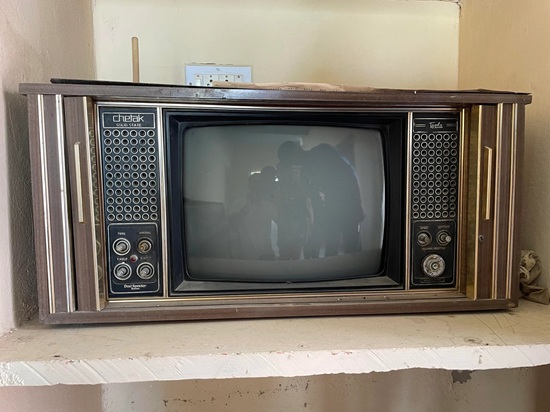
From Hillan to Ludhiana: Partition and beginnings
The Partition of 1947 tore through families in Mirpur and the surrounding belt, and the Oberoi family was no exception.
Dispossessed and displaced, they crossed into India with the uncertain status of refugees, forced to rebuild from scratch in a new land that was itself still finding its feet.
In that milieu, formal schooling was often the first casualty; Raja Singh’s education was cut short, yet his education in hardship, improvisation and responsibility began early.
Like many Partition survivors in Punjab, he gravitated towards trade and small industry—spaces where hard work, trust and an instinct for people mattered more than degrees on a wall.
What set him apart was a combination of restlessness and vision: a conviction that modern India would need not only food and clothing, but also access to information, entertainment and inspiration inside the home.
Jupiter Radios: giving India a voice
In 1961, barely fourteen years after Partition, he launched his first major venture: Jupiter Radios. These were not luxury items meant for a thin professional elite; they were priced so that lower-middle-class and small-town families could aspire to own them. Very quickly, Jupiter was selling around 1.5 lakh sets annually—an extraordinary number for a first-generation entrepreneur with no formal technical degree and no inherited industrial empire behind him.
The transistor and radio era created a common acoustic space—from news bulletins to Hindi film songs and kirtan relayed from major gurdwaras—and Jupiter radios became part of that tapestry in Punjab and beyond. For many homes, a Jupiter set was the first window to the wider world: the first time they heard a Prime Minister’s address live, a World Cup commentary, or a broadcast from Darbar Sahib. That was the beginning of Raja Singh’s quiet mission—democratising technology for the Indian household.
Texla: putting television in the baithak
If radios brought the world’s sound to Indian homes, Texla would bring its images. In 1972, he launched Texla televisions, once again swimming against the current at a time when imported brands, small capacities and a heavily regulated economy made electronics manufacturing a risky proposition. Through the 1970s and 1980s, as black-and-white sets gave way to colour and Doordarshan beamed into every district, Texla TV sets became a familiar piece of furniture in living rooms across North India.
By the late 1980s, Texla was manufacturing over three lakh TV sets annually and, in Punjab, its market share approached an astonishing 95 per cent. In countless homes, “TV” and “Texla” were used almost interchangeably, the way some people said “fridge” and meant a single dominant brand. Raja Singh understood the aspirational energy of small-town and rural families: he kept his focus on robust, affordable sets that could survive dusty village roads, voltage fluctuations and the proud habit of keeping them on for hours during serials, matches and live kirtan.
He did not stop with Texla. He launched allied brands such as Beltek and Bestavision and set up manufacturing units in Delhi, Ludhiana, Noida and Patna, including a picture tube unit under the Mullard Tubes name in Ludhiana. In doing so, he seeded an entire ecosystem—technicians, component suppliers, service centres and sales networks—that trained thousands of young people in electronics and after-sales service.
A family enterprise and what became of Texla
Behind the brand was a close-knit family that shared both the Partition memory and the entrepreneurial journey.
His son, Kawaljit Oberoi, has often underlined that his father never had any formal education, but hard work and dedication brought him success, and he remains one of the key inheritors of that business ethos.
Raja Singh is also survived by his broader family, including his brothers Inderjit and Sukhwinder, who went on to manage significant parts of the family’s diversified ventures in Dehradun.
As the Indian television market opened up to global majors and technology cycles shortened, the Texla name inevitably ceded space on showroom fronts to multinational brands. But the Oberoi family did not retreat; in classic Punjabi entrepreneurial fashion, they adapted and diversified.
The group moved into hospitality with the Nirvana luxury hotel and Club Nirvana in Ludhiana, creating a social hub that became an extension of the city’s business and cultural life. They expanded into plastics and metals under Texla Plastics and Metals, and into road-safety infrastructure through the “Dark Eye” brand, which supplies safety products like road studs and delineators across India and abroad.
Television manufacturing itself continued through a unit in Noida, even as the nature of the business shifted in an era of flat panels, contract manufacturing and global supply chains.
In that sense, Texla’s visible footprint may have changed, but the industrial DNA it created—risk-taking, technical skill, employment generation—remains embedded in the ventures that bear the family’s imprint.
Gurbani, seva and the Sikh ethic
Success in business did not close Raja Singh in on himself; it nudged him towards a different kind of production line—one dedicated not to appliances but to seva and spiritual transmission.
With the establishment of Sarab Sanjhi Gurbani, he turned the tools of his trade—audio-visual technology, duplication and distribution—towards spreading the message of the Gurus.
Long before digital platforms put kirtan and kathā on every smartphone, Sarab Sanjhi Gurbani produced and distributed audio and video cassettes, posters and booklets, and arranged telecasts of Gurbani and devotional programmes on popular radio and TV channels.
For many Sikh and Punjabi families, especially those who had migrated abroad, these cassettes and broadcasts were a vital link with the shabad and the collective memory of gurdwara sangat.
Running through these efforts was a distinctly Sikh sensibility: that material success must be anchored in naam, kirat and vand chhakna—remembering the divine, earning honestly and sharing with others. His Partition experiences made him acutely sensitive to the pain of uprooted communities, and that empathy shaped his later social engagements, including his response to the 1984 anti-Sikh violence.
Education and rebuilding lives
Another major pillar of his legacy is education. Through the Guru Ram Das Charitable Trust, he helped establish institutions such as GRD Academy in Ludhiana, GRD Academy in Dehradun and the GRD Institute of Management and Technology in Dehradun. These institutions opened doors for first-generation learners from families not very different from his own in the 1950s and 1960s—families for whom English-medium schooling and professional education had once been distant dreams.
For Partition survivors, the memory of interrupted schooling is particularly sharp; in investing in schools and colleges, Raja Singh was, in a sense, restoring to the next generation what his generation had been denied. Classrooms, laboratories and playgrounds replaced refugee camps and improvised shelters, and the children walking those corridors are part of his living legacy.
His concern for the displaced did not stop with Partition. After the 1984 anti-Sikh pogroms, he is remembered for offering employment and livelihood support to riot-affected families, giving them a stable footing in Ludhiana and beyond. In doing so, he completed a circle—from being a child helped by a fledgling nation in 1947 to becoming an elder who extended his hand to a wounded community in 1984.
A life well lived, a legacy that endures
When he passed away on 28 February 2026, at the age of ninety, the news was carried not merely as the death of an industrialist, but as the departure of a figure who had quietly shaped everyday life in North India. The prayer meeting at GRD Academy, Ludhiana, on 5 March 2026, is being held not just for a family patriarch but for a generation that bridged the distance from kerosene lamps to colour television, from refugee trains to thriving industrial townships.
Sardar Raja Singh’s legacy can be read in many registers. It is there in the lint-covered Texla TV still sitting in some ancestral baithak, stubbornly functional. It is in the careers of technicians who learnt their skills on his shop floors and later started their own workshops. It is in the students carrying schoolbags with the GRD emblem, and in the driver who slows down at a reflective Dark Eye road stud on a foggy winter night. It is also in the strains of a recorded shabad that once travelled on a cassette produced by Sarab Sanjhi Gurbani and is now streamed across continents.
Above all, his story is a reminder that resilience is not a slogan but a lifelong discipline: of starting afresh after displacement, of entering new industries without pedigree, of giving back without fanfare, and of holding fast to faith while continually engaging with modernity.
From Hillan in Mirpur to the factories and classrooms of Ludhiana and Dehradun, Raja Singh Oberoi’s journey honours both the scars of Partition and the Sikh ideal of chardikala—an ever-rising spirit—in a world that he helped to wire, tune and switch on.
March 4, 2026
-

-
KBS Sidhu, Former Special Chief Secretary Punjab
kbs.sidhu@gmail.com
Disclaimer : The opinions expressed within this article are the personal opinions of the writer/author. The facts and opinions appearing in the article do not reflect the views of Babushahi.com or Tirchhi Nazar Media. Babushahi.com or Tirchhi Nazar Media does not assume any responsibility or liability for the same.