Costa Rica: Where the line of development does not cross nature....by Rachhpal Sahota
A few hours after we boarded our flight on January 24, 2025, Cincinnati was buried under 15 inches of snow. Temperatures had dropped below –15°C (6°F).
That same evening, when we landed at Daniel Oduber Quirós International Airport (LIR) in Costa Rica, the sun still had hours before setting. Outside, it was bright daylight and 89°F.
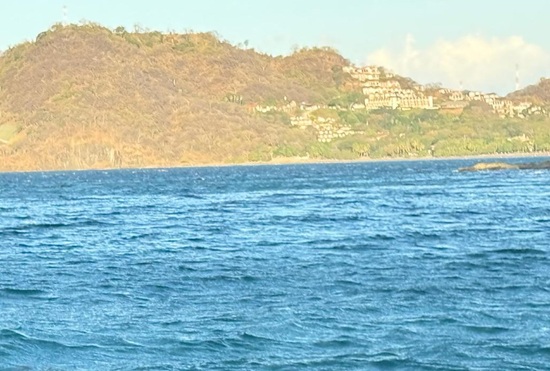
In the span of a few hours, we had not merely traveled from one place to another. We had moved from one season into another.
Our first surprise came through the airplane window.
Costa Rica is not a flat country.
Hills rise and fold into valleys, wrapped by the sea, as if water and land are continuously reshaping one another.
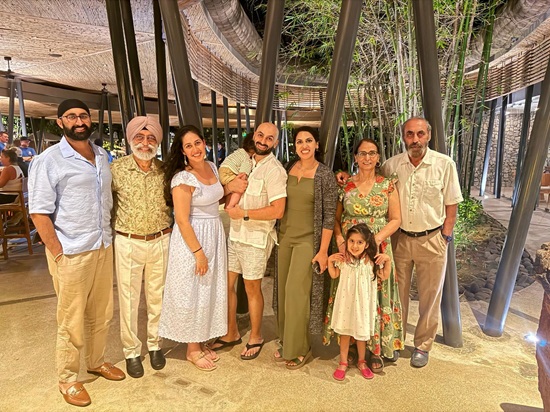
There were nine of us in total — seven adults and two small children, six months and four years old.
Manjeet and I flew in from Cincinnati. The rest joined from Columbus, Chicago, and New York via Atlanta.
Within hours, we found ourselves in a place where it felt as though nature, not humans, had written the rules — warm air, undulating hills, dry yet lush forests. There was a quiet sense that this landscape had not yet been aggressively negotiated with.
We spent the first two nights in an Airbnb with a small pool that my four-year-old granddaughter thoroughly enjoyed. The next five nights were at the Waldorf Astoria Costa Rica Punta Cacique, where the pools, the adjoining beach, and the surrounding hills seemed to slow time itself.
But what stayed with me was not the comfort, nor Costa Rica’s prosperity.
It was what Costa Rica had refused to do — the very things the rest of the world seems unable to resist.
A Country Where Beaches Cannot Be Sold
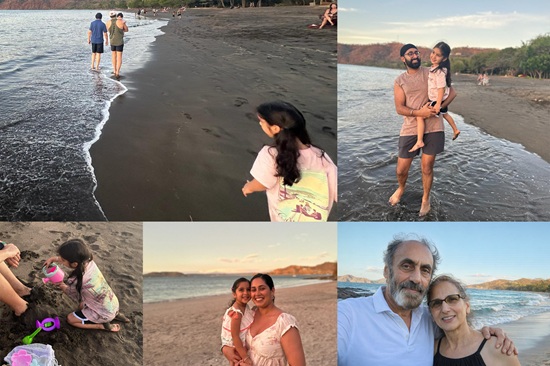
In Costa Rica, beaches cannot be privately owned.
By law, the first 50 meters inland from the high-tide line are public. The next 150 meters form a protected maritime zone where strict regulations apply. Hotels, homes, and resorts must step back.
You can walk the entire coastline without obstruction.
In a world where coastlines are bought by the highest bidder, Costa Rica has written into law that the sea belongs to everyone.
A Nation That Chose to Preserve Its Share of Nature
Nearly 26% of Costa Rica’s land is designated as national parks and protected areas. More than a quarter of the country is legally committed to remaining forest.
Costa Rica is about the size of West Virginia — only 0.03% of the Earth’s land surface — yet it contains nearly 6% of the world’s biodiversity.
Not because it is large.
But because it chose to protect what it had.=
The Wildlife Preserve — and the Canopy Above It
We visited a rescue center where injured and displaced animals are rehabilitated. Sloths rested in philosophical stillness. Toucans flashed impossible colors. Mantled howler monkeys announced their presence long before we saw them.
Beyond the howlers, we encountered two other personalities of the forest — the agile spider monkeys and the curious white-faced capuchins.
And then we went above them.
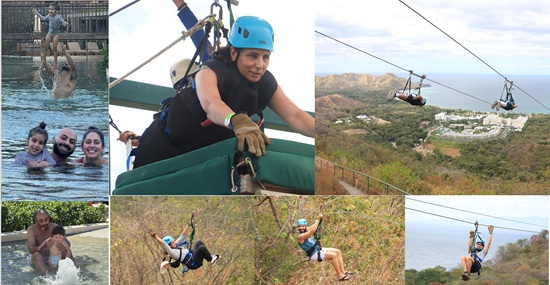
Ziplining is not merely an adventure; it is perspective. A steel cable stretched between two hills, one end higher than the other. Suspended from the higher side, you slide across the valley below at exhilarating speed.
We crossed five ziplines. One stretched nearly a mile, taking about 45 seconds from end to end.
From above the canopy, the forest looks the way birds must see it — layered, dense, alive.
The children will remember the pools.
We will remember the trees rushing beneath our feet.
Geography as a Quiet Regulator
Guanacaste, where we stayed, is part of Costa Rica’s dry tropical forest — rolling hills, patches of golden grass, and pockets of dense green.
Costa Rica sits between two oceans — the Pacific and the Caribbean — and is threaded with volcanoes, cloud forests, rivers, and coastlines. The terrain itself prevents mindless sprawl. Here, nature sets the limits before humans do.
Being close to the equator, Costa Rica does not experience dramatic seasonal changes. Daylight remains nearly constant throughout the year, and temperatures vary more with elevation than with time.
Here, climate shifts vertically, not seasonally — another quiet reminder that geography, not human ambition, defines the rhythm of life.
A Quiet National Philosophy
In 1948, Costa Rica abolished its army. This was no accident.
After a brief civil war, the victorious leader, José Figueres Ferrer, did something almost unheard of in modern history. Instead of consolidating military power, he dismantled it — both the defeated forces and his own — ensuring future governments would be free from military interference.
He expanded social reforms, nationalized banks and insurance, granted women the right to vote, and extended full citizenship to citizens of African descent. Money once meant for the military began flowing into education, healthcare, and public welfare.
More than seventy years later, that decision is still visible.
Pura Vida — pure life — is not a slogan.
It is policy.
Beaches for people.
Forests for the future.
Wildlife under legal protection.
Development within boundaries.
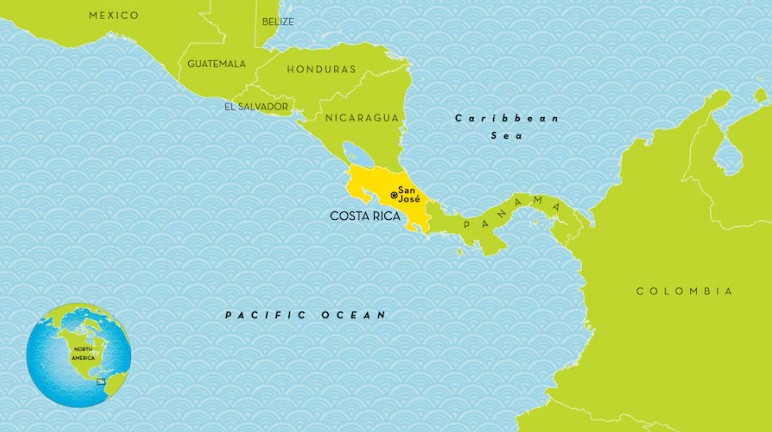
Not a Postcard — A Living Country
We left Costa Rica on January 31 and reached home at 3 a.m. the next morning — back to the frozen Midwest we had left behind.
That same day, we read the news: Costa Rica had elected a new president, Laura Fernández.
While we had been walking beaches that no one could own and gliding over forests that could not be cleared, the country was participating in a democratic choice about its future.
It was a reminder that Costa Rica is not a preserved natural exhibit. It is a living democracy.
And yet, everywhere you look, you see the results of decisions made decades ago.
What I Will Remember
Yes, the pools were beautiful.
Yes, the Waldorf Astoria was stunning.
Yes, the zipline was thrilling.
But what I will remember most is this:
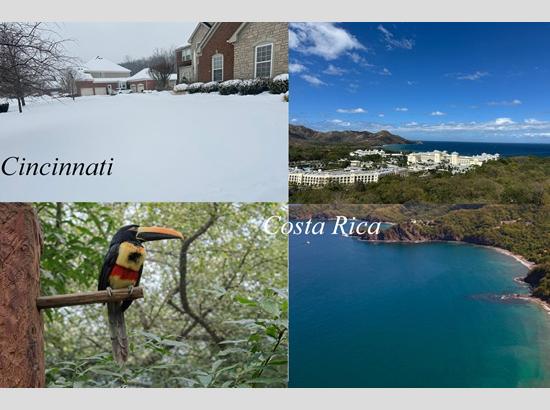
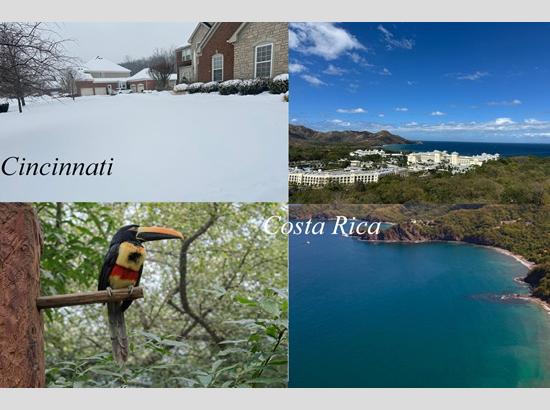
How, in a matter of hours, we went from –6°F frozen streets to 89°F tropical hills.
And how it became clear that somewhere in this world, a country had truly decided that nature is not an obstacle to progress — it is the definition of it.
Where you walk beaches no one can claim.
Where you glide over forests that cannot become parking lots.
Some countries preserve nature in parks. Costa Rica has built a country inside nature.
Pura Vida is not a slogan.
It is visible policy.
February 4, 2026
-

-
Rachhpal Sahota, Scientist, U.S.A Editor Babushahi Network
rachhpalsahota@hotmail.com
Phone No. : 1111
Disclaimer : The opinions expressed within this article are the personal opinions of the writer/author. The facts and opinions appearing in the article do not reflect the views of Babushahi.com or Tirchhi Nazar Media. Babushahi.com or Tirchhi Nazar Media does not assume any responsibility or liability for the same.