Photo Source: UNESCO's X account
Still A Man’s World? UN warns women missing in Science and Tech jobs; Gender gap remains stark
On International Day of Women and Girls in Science, the UN says excluding women from tech weakens global innovation and progress
Harvinder Kaur
Chandigarh, February 12, 2026: Women remain significantly underrepresented in science and technology careers worldwide, with the United Nations warning that the persistent gender gap is slowing global progress and innovation.
Marking the International Day of Women and Girls in Science, UN Secretary-General António Guterres highlighted the stark imbalance in fast-growing technology sectors.
Women make up just 26 per cent of the workforce in data and artificial intelligence, and only 12 per cent in cloud computing — one of the most critical pillars of the digital economy.
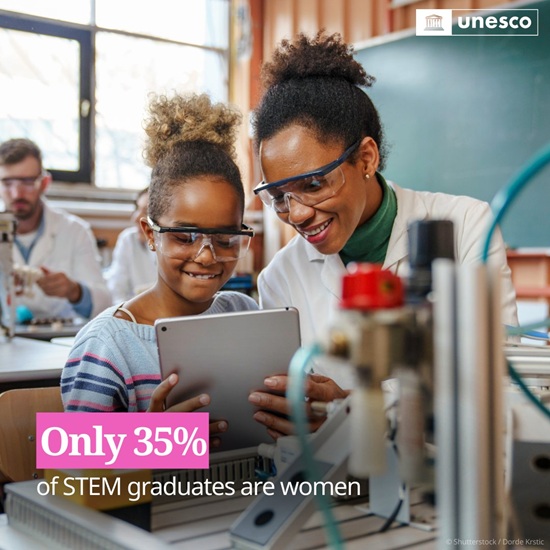
He cautioned that excluding women from scientific and technological fields weakens the world’s ability to tackle urgent global challenges, from climate change and public health crises to space security.
“Denying women equal opportunities in science limits our collective potential to solve humanity’s biggest problems,” he said, calling for stronger efforts to ensure equal participation.
The UN stressed that barriers such as limited research funding, gender stereotypes and discriminatory workplace practices continue to restrict women’s advancement in science and tech careers.
To address this, the organization is promoting a more integrated approach that combines artificial intelligence, social sciences and finance to drive inclusive and sustainable development.
Closing gaps in digital skills, supporting women-led start-ups and ensuring responsible technology governance are seen as key steps toward meaningful change.
As reported by United Nations, One example of progress is Asel Sartbaeva, a chemist and entrepreneur from Kyrgyzstan. An associate professor at the University of Bath in the United Kingdom and co-founder of biotech company EnsiliTech, she is working on improving vaccine stability so they can withstand high temperatures.
Her research could make it easier to deliver life-saving vaccines to remote and underserved communities without complex refrigeration systems. Beyond her scientific work, Sartbaeva serves as an ambassador for UNICEF’s Girls in Science programme in Kyrgyzstan.
The initiative provides mentoring, science masterclasses and confidence-building training to encourage girls to pursue higher education and careers in science and technology.
She noted that in many communities, family concerns — especially fears that science careers may interfere with marriage and family life — discourage girls from entering these fields. However, she emphasized that professional success and personal life are not mutually exclusive.
While opportunities for women in academia and research have improved over the years, experts say progress remains uneven. Thousands of girls have participated in programmes promoting science education, yet the overall gender gap in technology-related jobs remains wide.
On the International Day of Women and Girls in Science, the UN renewed its call for urgent action, stressing that empowering women in science and technology is not just about equality — it is essential for building a more innovative and resilient world.