Mera Khazana… Punjab Had Shown the Might of ‘Student Power’ Decades Ago
Kudos to Gen-Z for the Victory of the Delhi Movement
Moga’s Regal Cinema remains a living testimony to the triumph of ‘Student Power’ that was at its peak in Punjab 53 years ago
Key Takeaways
Delhi and Punjab: The recent Gen-Z student movement in Delhi against the NEET paper leak takes me back more than five decades, when Punjab witnessed a remarkable assertion of ‘Student Power’.
The Moga Firing of 1972: At the heart of that movement was the Moga Regal Cinema firing of October 1972, when police opened fire on protesting students.
Regal Cinema — A Question of Student Honour: Under the leadership of the Punjab Students Union (PSU), the demand that Regal Cinema be permanently shut down and turned into a memorial to the martyrs became a question of honour and dignity for the student movement.
A Long and Gruelling Struggle: The battle continued for 14 years. Hundreds of students faced brutal police repression, imprisonment and criminal cases. The struggle remained alive even through the Emergency.
I, Baljit Balli, was also deeply involved in the Moga agitation. I spent four days in the custody of CIA Staff, Ludhiana, enduring the inhuman methods of physical torture used by Punjab Police in those days. My shoulder bone was fractured by police lathis during an agitaion in 1994. I was jailed several times, I was also booked under the DIR during the Emergency and had to remain underground until it was lifted. During those difficult months, my entire family had to bear the brunt of police harassment and excesses simply because the authorities were unable to trace me.
Organising Without Technology: Unlike today’s Gen-Z, we had no internet, mobile phones or social media. Students travelled across Punjab on bicycles, buses and trains — and often on foot — yet managed to maintain a statewide network and organise successful strikes.
The Historic Victory of 1986: Finally, the Surjit Singh Barnala government accepted the demand in 1986. The government acquired the Regal Cinema property and established a ‘Memorial Library’ and government offices there.
Four Decades Later — Neglect and Apathy: Sadly, nearly 40 years later, this government-owned memorial property worth crores of rupees is turning into a ruin because of the neglect of successive governments, including the present Bhagwant Mann government.
Punjab’s Legacy of ‘Student Power’: The Delhi movement may have written an important new chapter, but for Punjab, the phenomenon of ‘Student Power’ is hardly new. Punjab had demonstrated its extraordinary potential more than half a century ago.
The Full Story
The unprecedented movement launched by young students in Delhi over the NEET paper leak, and their victory after forcing the Modi government to bow to their demands, suddenly took me 53 years back — to a time when Punjab witnessed a magnificent assertion of ‘Student Power’ and ultimately its triumph.
The memories began playing before my eyes like an old film reel: the Moga Regal Cinema firing of October 1972, followed by the long and turbulent student struggle led by the Punjab Students Union (PSU).
There was, of course, no demand then for the resignation of a chairman. But there was a burning demand for action against those who ordered the firing and those who actually fired upon the students.
Yet an even bigger and more enduring issue emerged out of the tragedy — Regal Cinema itself.
It was the chain of events associated with this cinema that had culminated in police firing and the death of young students. Even after the immediate issues arising from the Moga firing began to recede, one demand remained non-negotiable: Regal Cinema must remain closed forever. It must never be allowed to reopen.
That demand sustained a student movement for years.
And with that memory came another flood of images: hundreds of students facing police lathis; the sting of tear gas and bullets; young bodies subjected to torture in CIA Staff centres and interrogation centres that had virtually turned into slaughterhouses; repeated spells in jail; and criminal cases faced by students who put their education and careers at stake for a cause they believed in.
I was not merely an observer of that story. I was one of its participants.
As a frontline state-level leader of the Punjab Students Union led by Shaheed Prithipal Singh Randhawa, I too became part of this turbulent chapter of Punjab’s student history.
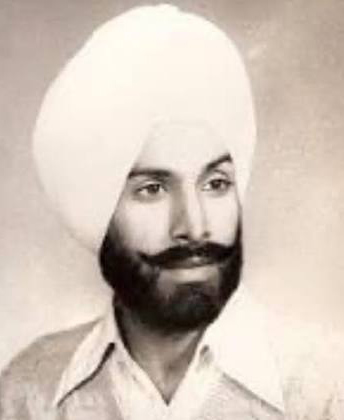
Late Prithipal Singh Randhawa ( PSU Leader - Murdered in 1979)
During the Moga agitation, I spent four full days in CIA Staff custody in Ludhiana, where I endured the inhuman methods of physical torture then used by Punjab Police. Police lathis fractured my shoulder bone. I went to jail several times.I was also booked under the DIR during the Emergency and had to remain underground until it was lifted. During those difficult months, my entire family had to bear the brunt of police harassment and excesses simply because the authorities were unable to trace me.
At the time of the Moga agitation, I was a BA student at Govt. Rajindra College, Bathinda.
Even today, when I look back, I sometimes feel that the scale of violence witnessed during the Moga firing agitation was perhaps unmatched by any subsequent mass movement in Punjab.
When There Was No ‘Gen-Z’ — and No Internet, No Insta , No WhatsApp
There is something I particularly want today’s young students to know.
There was no fashionable label called ‘Gen-Z’ in those days.
There were no Metro trains. There was no internet capable of carrying a message across the country within seconds. There was no Instagram, Facebook or WhatsApp.
Forget mobile phones — even landline telephones were far from common.
Government and police officials had motorcycles, vehicles and wireless communication systems. Activists like us had bicycles, buses, trains, tempos, carts — or simply our feet.
We walked miles through villages and towns, across fields and along dusty tracks.
And when arrest warrants had been issued and the police were hunting for us, merely staying in touch with one another became a risky operation.
Yet we, the PSU leaders, somehow maintained contact across Punjab.
With just a day's notice, we could get posters pasted across the state and organise strikes in colleges throughout Punjab.
Sometimes, even today, I wonder: How on earth did we manage to do all that?
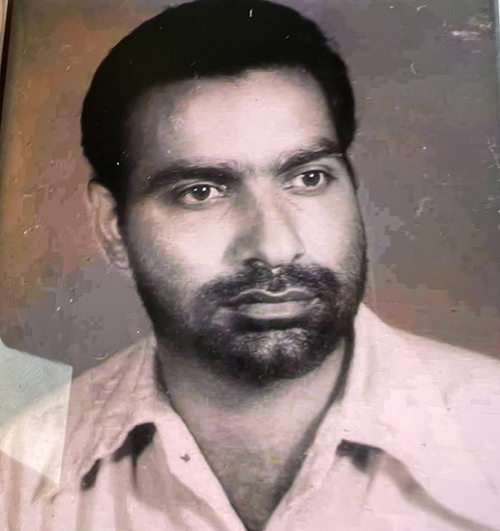
Baljit Balli ( During Emergency Days 1976-77)
Regal Cinema Became a Question of Honour
Coming back to the central issue: permanently shutting down Regal Cinema — which had become a symbol of the deaths in the Moga firing — and turning it into a memorial to the martyrs became a question of the honour, dignity and credibility of the student movement.
The owner of Regal Cinema was no small businessman. His group also owned cinemas in Delhi and Mumbai. It was a wealthy business group and, naturally, enjoyed considerable influence in the corridors of power.
Successive governments at the Centre and in Punjab repeatedly made determined attempts to reopen the Moga Regal Cinema.
But the Punjab Students Union, backed by young people and other sections of society, thwarted those attempts year after year.
The Giani Zail Singh government remained in office until 1975. Thereafter came governments headed by Parkash Singh Badal and Darbara Singh, besides spells of Governor's Rule.
Even during the Emergency imposed by Indira Gandhi in 1975, an attempt was made to reopen the cinema.
That attempt, too, was defeated.
Shaheed Prithipal Singh Randhawa, I and several of our comrades remained active in the struggle until 1977. Even after our generation moved on, successive layers of PSU leadership stood guard over this cause and ensured that the cinema was not reopened.
As the years passed, the Regal Cinema building itself grew old and dilapidated.
Victory — After 14 Years
Finally, after 14 long years of struggle, the Surjit Singh Barnala government accepted the PSU's demand in 1986: Regal Cinema would remain permanently closed and the government would acquire the property.
I could not recall the exact date myself. However, Gian Singh Moga, a former District Public Relations Officer of the Punjab Government who later took to journalism, recorded the details in an article written for Babushahi.
According to his account, on March 21, 1986, the Punjab Public Relations Department, through its then Additional Director S. Piara Singh Bhupal, completed the transfer of approximately 50 marlas of Regal Cinema property to the Punjab Government.
The owners were paid Rs 11.70 lakh.
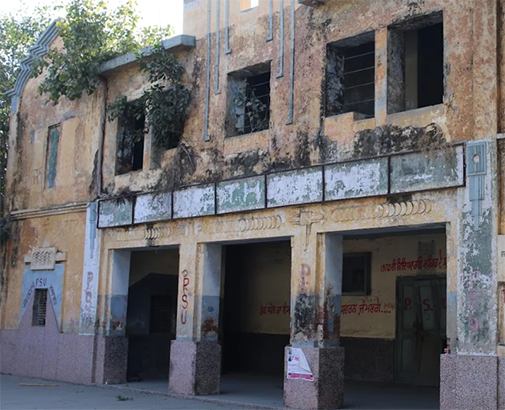
After taking possession, the government opened the office of the Assistant Public Relations Officer there and established an information centre where people could come and read newspapers.
Regal Cinema was renamed ‘Yadgari Library’ — the Memorial Library.
The old cinema hall began to be used for private and government functions, cultural programmes, plays and other public activities.
For the maintenance and management of the building, the Deputy Commissioner of Faridkot constituted a committee headed by the SDM, Moga. Student representatives on the committee included then PSU leader Kuldeep Singh Dhaliwal, now an AAP MLA, and fellow activist Kanwaljit Khanna of Jagraon.
When Moga became a separate district on November 24, 1995, the office of the District Public Relations Officer was also established in this building.
And Then Came Decades of Neglect
Governments came and went — those of Beant Singh, Harcharan Singh Brar, Rajinder Kaur Bhattal, Parkash Singh Badal and Capt Amarinder Singh.
Yet nobody really cared for this historic building.
Gradually, it was allowed to deteriorate into a ruin.
The present Bhagwant Mann government has also made no meaningful effort to preserve the building.
Four decades later, this government-owned property, now worth crores of rupees, stands there almost as a rebuke to those who enthusiastically issue statements supporting the Delhi agitation and try to reap political dividends from it — while ignoring a historic monument to Punjab’s own student movement.
Ironically, Kuldeep Singh Dhaliwal, himself a former PSU leader, went on to become a minister and is now an MLA and spokesperson of the ruling party. I do not know whether the plight of this historic building has ever caught his attention.
There is genuine apprehension among people in Moga that some land mafia may one day grab the Regal Cinema property — or that the government itself may hand it over to a private builder.
There is another, more immediate danger: a portion of the neglected structure could collapse one day and cause a serious accident.
Punjab Has Seen the Miracle of ‘Student Power’ Before
The Delhi movement against the NEET paper leak has undoubtedly created a new chapter in the history of collective mass action. By breaking through the pressure of those in power, it has also created more space for others to speak up.
Every mass movement has its own context, its own logic and its own achievements.
Punjab’s farmers and ordinary people have already demonstrated the might of collective action through the historic Kisan Morcha at Delhi’s borders.
But the ‘Student Power’ displayed at Jantar Mantar in Delhi is not an entirely new phenomenon for me — or for the thousands of Punjabis who were part of the student movement of our time.
Of course, the era is different. The circumstances are different. The tools of mobilisation are different.
But Punjab had witnessed the extraordinary power of organised students more than five decades ago — when there were no mobile phones, no internet and no social media to amplify their voice.
And the old Regal Cinema of Moga — neglected and crumbling though it may be today — still stands as a testimony to that remarkable triumph of Student Power.
( Note: More than five decades have passed since many of these events took place. There may, therefore, be an inadvertent error regarding a name, date, place or sequence of events. I seek the readers’ indulgence in advance for any such lapse.)
Baljit Balli
July 26, 2026
-
-
Baljit Balli, Editor-in-Chief, Babushahi News Network
tirshinazar@gmail.com
Phone No. : +91-9915177722
Disclaimer : The opinions expressed within this article are the personal opinions of the writer/author. The facts and opinions appearing in the article do not reflect the views of Babushahi.com or Tirchhi Nazar Media. Babushahi.com or Tirchhi Nazar Media does not assume any responsibility or liability for the same.