IDC Chandigarh, IOM India hold stakeholder consultation on Safe Migration, release PRAYAS report; View Pics
Babushahi Bureau
Chandigarh, July 21, 2026: The International Organization for Migration (IOM) India, in collaboration with the Institute for Development and Communication (IDC), Chandigarh, held a stakeholder consultation on Monday to discuss emerging trends in international migration from India and strategies to strengthen safe, orderly and regular migration.
The consultation featured the release of key findings from the PRAYAS (Promoting Regular and Assisted Migration for Youth and Skilled Professionals) International Migration and Mobility Mapping Report and explored ways to expand Jagruk Jao (Go Aware, Stay Safe), IOM India's migrant information and awareness initiative.
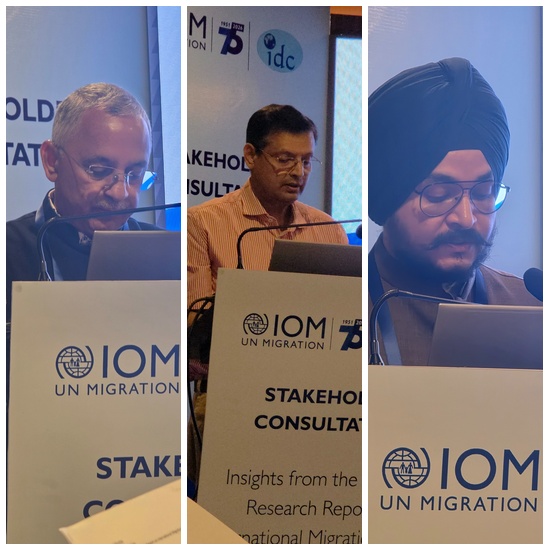
The event brought together representatives from government departments, academia, civil society, research institutions, recruitment agencies and development partners to promote evidence-based migration governance.
The consultation opened with addresses by Sanjay Awasthi, Head of Office, IOM India; Pramod Kumar, Chairman, IDC Chandigarh; Anurag Verma, Chief Secretary, Government of Punjab; and Yashudeep Singh, Protector of Emigrants, Chandigarh, Ministry of External Affairs. The speakers stressed the growing role of migration in India's development and called for rights-based policies to ensure safer migration pathways.
Developed by IOM India in partnership with the Ministry of External Affairs (MEA) and the Indian Council of World Affairs (ICWA), the PRAYAS report is based on more than 10,000 surveys, focus group discussions and stakeholder interviews conducted across high-migration states.
The report identifies changing migration patterns, increasing overseas mobility among skilled professionals and students, and migration's significant contribution to India's economy through remittances, skills transfer and knowledge exchange. It noted that India received an estimated USD 135 billion in remittances in 2025, highlighting the country's position as one of the world's leading recipients of remittance inflows.
Participants also discussed persistent challenges, including misinformation, unethical recruitment practices, high migration costs and limited awareness of migrant protection mechanisms. They called for stronger institutional coordination, improved access to reliable migration information, enhanced support services and wider awareness campaigns.
A dedicated session focused on Jagruk Jao, with participants describing it as an effective platform for educating prospective migrants about legal migration routes, migrant rights, ethical recruitment practices and available support services.
The consultation concluded with a collective call to expand and institutionalise the Jagruk Jao initiative across more states and high-migration districts, while reaffirming India's commitment to promoting ethical, regular and evidence-based migration governance.